
Gantry cranes play a critical role across construction sites, fabrication yards, shipyards, precast plants, and industrial maintenance projects. However, not all gantry cranes are intended for long-term installation. On many job sites, the choice is not simply which gantry crane to buy, but whether a temporary gantry crane or a permanent gantry crane is the better solution.
Understanding the differences between temporary and permanent gantry crane applications is essential for project managers, engineers, EPC contractors, and procurement teams. Each solution serves distinct operational needs, cost structures, safety requirements, and lifecycle expectations.
This article provides a detailed comparison of temporary and permanent gantry crane applications on job sites, covering design intent, installation methods, mobility, structural requirements, safety considerations, costs, and typical industries.
1. Defining Temporary and Permanent Gantry Cranes
What Is a Temporary Gantry Crane?
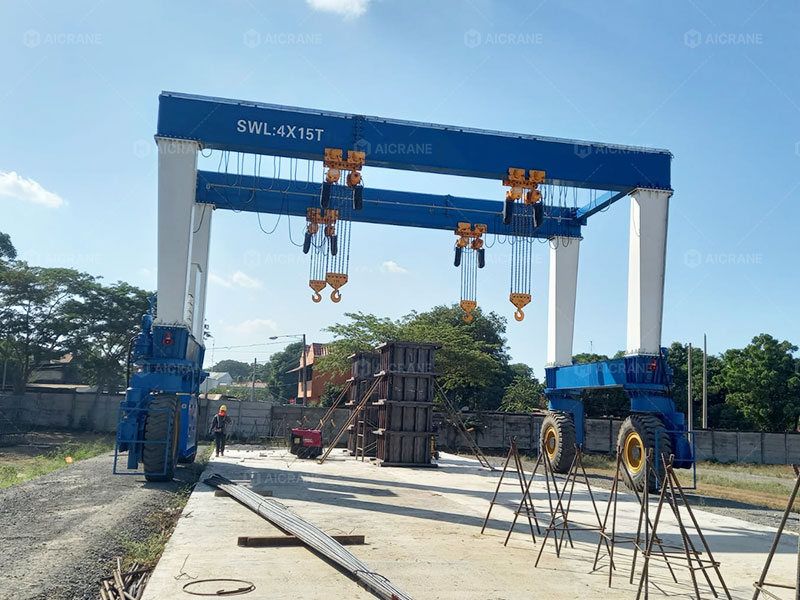
A temporary gantry crane is designed for short-term or project-based use. It is typically installed for a defined period—weeks, months, or the duration of a specific construction or maintenance task – and then dismantled, relocated, or stored.
Common forms include:
-
Portable gantry cranes
-
RTG rubber tyred gantry cranes used on leased or transitional yards
-
Modular gantry cranes assembled with bolted connections
-
Job-site gantry cranes used during erection or heavy equipment installation
Temporary gantry cranes prioritize mobility, fast installation, and flexibility over long-term structural integration.
What Is a Permanent Gantry Crane?
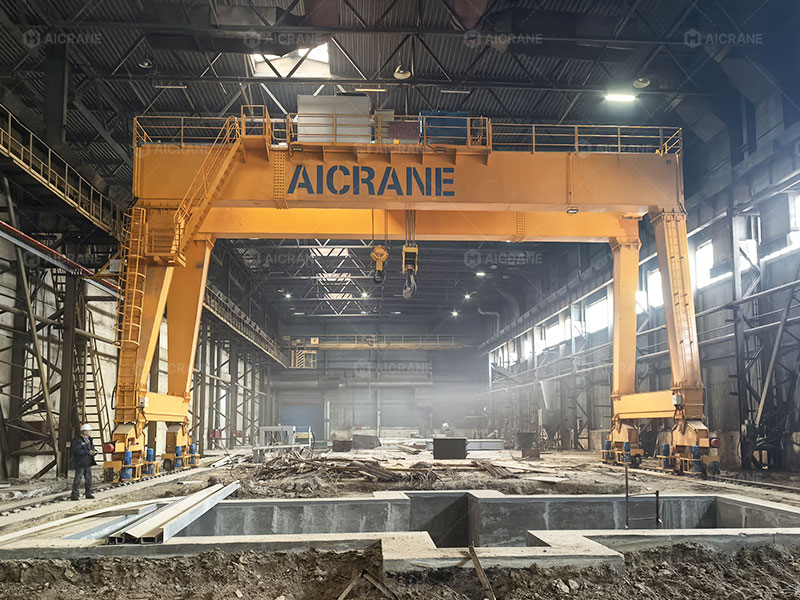
A permanent gantry crane is engineered as a fixed, long-term lifting solution integrated into a facility or site infrastructure. It is designed for continuous or repetitive use over many years.
Permanent gantry cranes often include:
-
Rail-mounted gantry cranes (RMG)
-
Heavy-duty double girder gantry cranes
-
Shipyard gantry cranes
-
Steel mill and power plant gantry cranes
These cranes are typically anchored to rails, concrete foundations, or embedded steel structures and form part of the site’s permanent material handling system.
2. Typical Job Site Scenarios and Applications
Temporary Gantry Crane Applications
Temporary gantry cranes are commonly used when:
-
The project has a clear start and end date
-
Lifting is required only during a specific construction phase
-
The site layout may change frequently
-
Permanent foundations are not justified
Typical job sites include:
-
Construction sites for bridge segments, beams, or steel structures
-
Power plant erection and equipment installation
-
Wind turbine component assembly yards
-
Ship repair yards and temporary dry dock operations
-
Industrial shutdowns and maintenance overhauls
For example, during the installation of heavy transformers or turbines, a temporary gantry crane may be erected solely to support lifting during commissioning and then removed once the work is complete.
Permanent Gantry Crane Applications
Permanent gantry cranes are used where:
-
Lifting operations are continuous or recurring
-
Long-term production efficiency is critical
-
Loads are heavy and repetitive
-
Site layout is stable
Typical job sites include:
-
Precast concrete plants
-
Steel fabrication yards
-
Container terminals and intermodal yards
-
Shipyards for block assembly
-
Mining and heavy industrial facilities
In these environments, the rail gantry crane becomes a core production asset, operating daily and often integrated with automation, rail systems, and workflow planning.
3. Structural Design and Engineering Differences
Structural Design of Temporary Gantry Cranes
Temporary gantry cranes are typically:
-
Modular in design
-
Bolted rather than fully welded on site
-
Lighter in overall structure (relative to capacity)
-
Designed with transportability in mind
Engineering focuses on:
-
Ease of assembly and disassembly
-
Adaptability to varying ground conditions
-
Reduced foundation requirements
Temporary cranes often rely on:
-
Outrigger systems
-
Adjustable legs
-
Rubber tyres instead of rails
However, this flexibility requires careful engineering to ensure stability under wind loads, dynamic lifting forces, and uneven ground conditions.
Structural Design of Permanent Gantry Cranes
Permanent gantry cranes emphasize:
-
Structural rigidity and fatigue resistance
-
Long-term load cycles (often millions of cycles)
-
High wind load and seismic design criteria
-
Integration with rails, foundations, and steel structures
These cranes are typically:
-
Heavier and more rigid
-
Fully welded with high-strength steel
-
Designed according to higher duty classes (A5–A8)
Permanent gantry cranes also allow for higher lifting capacities, larger spans, and greater lifting heights, which may not be economical or practical for temporary solutions.
4. Installation and Commissioning Requirements
Temporary Gantry Crane Installation
Installation of a temporary gantry crane is generally:
-
Faster (days rather than weeks)
-
Less dependent on large civil works
-
Performed using mobile cranes or forklifts
Key characteristics:
-
Minimal or no permanent foundations
-
Use of steel plates, compacted ground, or temporary rails
-
Simplified commissioning procedures
However, even temporary cranes require:
-
Load testing
-
Alignment checks
-
Safety system verification
Poor installation practices on temporary job sites can significantly increase the risk of instability or accidents.
Permanent Gantry Crane Installation
Permanent heavy duty gantry crane installation is more complex and includes:
-
Civil foundation construction
-
Rail installation and precision alignment
-
Long-term anchoring and grouting
-
Full commissioning and acceptance testing
Installation often forms part of a larger EPC (Engineering, Procurement, Construction) scope, where crane design is coordinated with building structures, process flow, and safety systems.
5. Mobility and Flexibility Considerations
Mobility of Temporary Gantry Cranes
Mobility is a key advantage of temporary gantry cranes:
-
Easily relocated within or between job sites
-
Can be dismantled and reused on future projects
-
Suitable for contractors managing multiple sites
Rubber-tyred or portable gantry cranes are especially valuable where:
-
Job sites are spread geographically
-
Lifting points change frequently
-
Project timelines are uncertain
Mobility of Permanent Gantry Cranes
Permanent gantry cranes offer limited mobility:
-
Rail-mounted systems are fixed to a defined working area
-
Relocation is expensive and often impractical
However, this lack of mobility is offset by:
-
Higher efficiency
-
Greater precision
-
Lower long-term operating cost per lift
6. Safety and Compliance Differences
Safety in Temporary Gantry Crane Applications
Temporary job sites often present:
-
Uneven ground conditions
-
Changing site layouts
-
Multiple contractors working simultaneously
As a result, safety risks can be higher if not managed properly. Temporary gantry cranes must include:
-
Anti-overturning measures
-
Wind speed monitoring
-
Load limiters and emergency stops
Strict site supervision and operator training are essential.
Safety in Permanent Gantry Crane Applications
Permanent gantry cranes benefit from:
-
Controlled environments
-
Dedicated operators
-
Established operating procedures
They often include advanced safety features such as:
-
Anti-sway systems
-
Collision avoidance
-
Integrated monitoring and diagnostics
Over time, permanent cranes generally achieve higher overall safety performance due to stable conditions and standardized operations.
7. Cost Considerations: Short-Term vs. Lifecycle Cost
Cost Structure of Temporary Gantry Cranes
Temporary gantry cranes typically offer:
-
Lower initial investment
-
Reduced civil works cost
-
Higher cost per operating hour if used long-term
They are ideal when:
-
Project duration is limited
-
Capital expenditure must be minimized
-
Equipment can be reused across projects
Cost Structure of Permanent Gantry Cranes
Permanent gantry cranes require:
-
Higher upfront investment
-
Significant foundation and installation costs
However, over a long service life, they deliver:
-
Lower operating cost per lift
-
Higher productivity
-
Better return on investment for continuous operations
8. How to Choose Between Temporary and Permanent Gantry Cranes
The decision depends on several key questions:
-
Is the lifting requirement short-term or ongoing?
-
Will the site layout remain stable over time?
-
How critical is mobility versus efficiency?
-
What is the total project lifecycle cost?
In many cases, contractors use temporary gantry cranes during construction and transition to permanent gantry cranes once production begins.
Conclusion
Temporary and permanent gantry cranes serve distinct but equally important roles on job sites. Temporary gantry cranes excel in flexibility, speed, and project-based applications, while permanent gantry cranes deliver long-term efficiency, structural robustness, and operational reliability.
Choosing the right solution requires a clear understanding of project duration, lifting frequency, site conditions, safety requirements, and lifecycle costs. By aligning gantry crane selection with actual job site needs, project owners and contractors can achieve safer operations, better efficiency, and optimal return on investment.