
The portable concrete mixer pump, a integrated equipment combining mixing and pumping functions, is widely favored in small and medium-sized construction projects for its flexibility and efficiency. For a concrete pump company, setting a reasonable price for this equipment is crucial to balancing profitability, market competitiveness, and customer acceptance. The final portable concrete mixer pump price is not arbitrarily determined but is affected by a combination of factors including product costs, market demand, brand strength, and policy environment, which require comprehensive consideration by the concrete pump company.
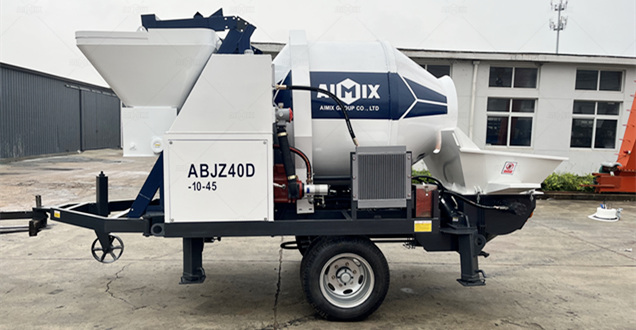
Product Cost of Portable Concrete Mixer Pump
Product cost is the core factor that a concrete pump company must prioritize when setting the portable concrete mixer pump price, as it directly determines the minimum profit margin. The cost of a portable concrete mixer pump mainly includes raw material costs, core component costs, and production and assembly costs. High-quality raw materials such as high-strength steel for the mixing bucket and pump body, corrosion-resistant alloys for vulnerable parts, will increase the initial cost, which is reflected in the final price. Core components such as hydraulic systems, motors, and mixing mechanisms are the “heart” of the equipment—if a concrete pump company adopts well-known brand components with high reliability and durability, the component cost will be significantly higher than that of low-cost alternatives, leading to a higher portable concrete mixer pump price. In addition, production and assembly costs, including labor costs for skilled workers, equipment depreciation of production lines, and quality inspection costs, also affect the pricing. For small-scale concrete pump companies with immature production processes, the unit production cost is usually higher, so they may set a relatively high price to ensure profits, while large-scale companies with economies of scale can reduce unit costs through mass production, enabling more competitive pricing.
Market Demand and Competitive Landscape
The market demand for portable concrete mixer pump and the competitive landscape in the industry have a direct impact on how a concrete pump company sets prices. When the market demand is strong—for example, during the peak construction season or in regions with booming infrastructure construction—the concrete pump company has more pricing power and may set a higher portable concrete mixer pump price without losing customers. Conversely, in a market with sluggish demand, companies often lower prices or launch promotional activities to stimulate sales and clear inventory. The competitive landscape also plays a key role: if there are only a few concrete pump companies supplying portable concrete mixer pumps in the market, the industry has a monopoly tendency, and companies can set prices based on their own profit goals; if the market is saturated with numerous competitors, companies must adjust prices according to the market average level and competitors’ pricing strategies. For example, if a rival company launches a similar portable concrete mixer pump at a lower price, the concrete pump company may have to reduce its price appropriately or highlight product advantages to maintain market share. Additionally, the demand for different configurations of portable concrete mixer pumps also affects pricing—models with larger mixing capacity, longer pumping distance, or intelligent control functions are usually priced higher due to stronger market demand from large projects.
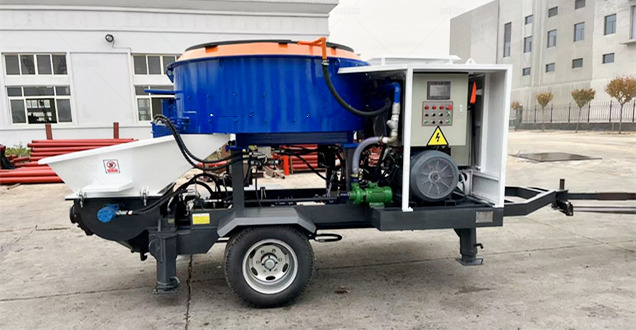
Brand Strength and Reputation of Concrete Pump Company
The brand strength and market reputation of a concrete pump company are important factors in forming a price premium for portable concrete mixer pump. Well-known concrete pump companies with years of industry experience, mature production technology, and a sound after-sales service system can set a higher portable concrete mixer pump price than little-known brands. This is because customers are willing to pay a certain premium for reliable quality and perfect after-sales support, which reduces the risk of equipment failure and subsequent maintenance costs. For example, a concrete pump company that has obtained international quality certifications, accumulated a large number of successful customer cases, and established a professional after-sales team can gain customer trust and set a price 10% to 20% higher than ordinary brands. On the contrary, emerging concrete pump companies with weak brand awareness often need to adopt low-price strategies to attract customers and open up the market, even if their product quality is comparable to that of well-known brands. Moreover, the brand positioning of the concrete pump company also affects pricing—companies targeting high-end markets with high-quality, high-performance portable concrete mixer pumps will set higher prices, while those focusing on the mid-to-low-end market will prioritize affordability.
Policy and Regulatory Factors
National and local policies and regulations also have an indirect impact on the portable concrete mixer pump price set by a concrete pump company. Import and export policies, tax rates, and environmental protection regulations are the main influencing factors. For concrete pump companies that import core components or sell products overseas, changes in import duties, export rebates, or exchange rates will directly affect the cost of portable concrete mixer pumps, thereby adjusting the final price. For example, if the government increases import duties on hydraulic components, the production cost of the concrete pump company will rise, leading to an increase in the portable concrete mixer pump price. Environmental protection policies also play a role: with the increasing emphasis on environmental protection, many regions have issued regulations requiring construction equipment to meet emission standards. Concrete pump companies need to invest in upgrading production technology or adding environmental protection devices to make portable concrete mixer pumps comply with regulations, which increases production costs and further affects pricing. Additionally, government subsidies or preferential policies for green energy equipment may reduce the cost burden of concrete pump companies, allowing them to set lower prices for energy-saving portable concrete mixer pumps.
After-Sales Service and Value-Added Services
The after-sales service and value-added services provided by a concrete pump company are important factors that affect the portable concrete mixer pump price. Customers not only pay for the equipment itself but also for the subsequent service guarantee. Concrete pump companies that provide comprehensive after-sales services, such as a long warranty period (1-2 years for the whole machine and 2-3 years for core components), on-site maintenance, free technical training, and timely supply of spare parts, usually set a higher portable concrete mixer pump price. These services increase the operating costs of the company but also enhance customer satisfaction and loyalty. In contrast, companies that provide limited after-sales services can only set lower prices to remain competitive. Value-added services such as customized modification of portable concrete mixer pumps according to customer needs (e.g., adjusting mixing capacity or pumping height) also affect pricing—customized equipment requires additional R&D and production costs, so the price will be higher than that of standard models. Additionally, some concrete pump companies bundle value-added services such as equipment installation, commissioning, and regular maintenance into the total price, which also leads to a higher overall portable concrete mixer pump price.
Concrete Pump Machine Price Market Trend
The overall market trend of concrete pump machine price also affects how a concrete pump company sets the portable concrete mixer pump price. The portable concrete mixer pump, as a type of concrete pump machine, its price is closely linked to the market price fluctuations of the entire concrete pump machine industry. If the price of core components for concrete pump machines (such as hydraulic pumps, motors) rises globally, leading to an overall increase in concrete pump machine price, the concrete pump company will have to adjust the portable concrete mixer pump price upward accordingly. Conversely, if technological advancements reduce the production cost of concrete pump machines, the market price will tend to decrease, and companies must follow the trend to adjust prices to avoid being eliminated. Additionally, the price trend of alternative equipment (such as separate concrete mixers and concrete pumps) also affects the pricing of portable concrete mixer pumps. If the price of alternative equipment drops significantly, the concrete pump company may need to lower the portable concrete mixer pump price to highlight its cost-effectiveness as an integrated equipment.
In summary, setting the portable concrete mixer pump price is a complex decision-making process for a concrete pump company, requiring comprehensive consideration of product costs, market demand, brand strength, policies, after-sales services, and industry price trends. By balancing these factors, the company can set a reasonable price that ensures profitability while maintaining market competitiveness.