
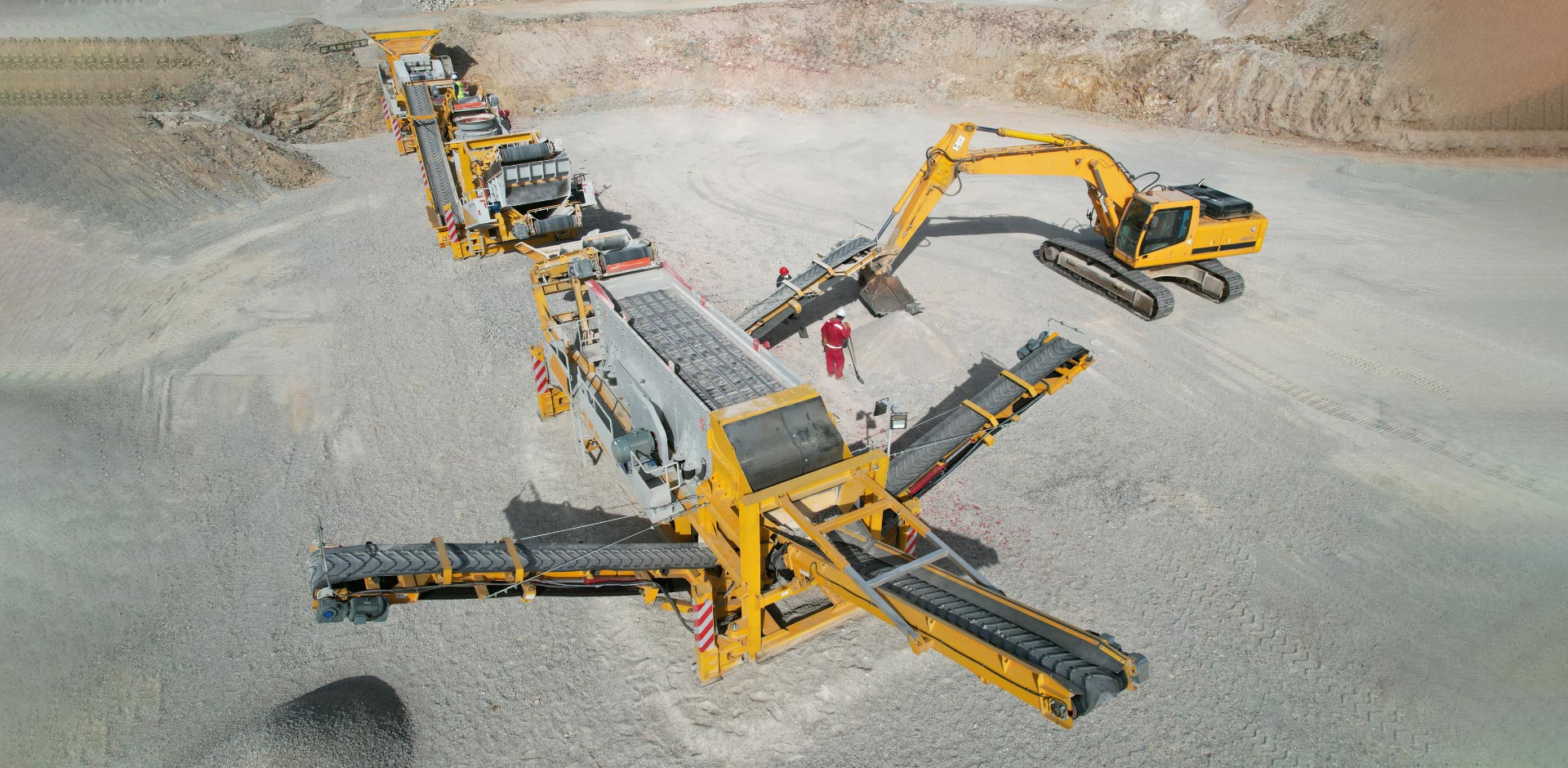
Let’s dispel a pervasive and costly myth right now: that producing construction aggregate from limestone is a simple, brute-force affair of smashing rock into smaller pieces. This antiquated view is responsible for mountains of substandard, flaky, and inconsistent material that compromises concrete strength, asphalt durability, and project budgets. The truth is far more sophisticated and compelling. Producing truly high-quality crushed limestone aggregate is a precise engineering discipline—a deliberate, multi-stage orchestration of specific fracture mechanics and meticulous particle shaping. It’s the difference between creating random gravel and engineering a foundational construction material with predictable performance. To settle for anything less than an optimized crushing circuit is to voluntarily build weakness into the very bones of our infrastructure. Let’s dive into the brilliant mechanics that transform raw limestone into a premium, specification-grade product.
The Foundational Fracture: Primary Crushing and the Rejection of Flakiness
The journey to quality begins not with the first crush, but with the first strategic decision: the selection of the primary crusher. This choice sets the entire geometric and structural destiny of the aggregate.
The Unrivaled Role of the Jaw Crusher in Limestone
For limestone, the jaw crusher is not merely an option; it is the indispensable cornerstone. Its operating principle—a compressive “nipping” action between a fixed and a moving jaw—is perfectly suited to limestone’s typically moderate to high compressive strength. Unlike impact crushers at this stage, which can induce uncontrolled, splintery fractures, the jaw crusher mobile initiates a more controlled, planar cleavage. This primary breakage is critical because it establishes the initial particle shape. The closed-side setting (CSS) of the jaw is the first master dial for controlling the maximum product size, creating a coarse but relatively uniform feed for the next stage. A well-set jaw crusher actively rejects the genesis of excessive flakiness and elongated particles, problems that are nearly impossible to correct later in the process.
Pre-Screening: The First Act of Quality Control
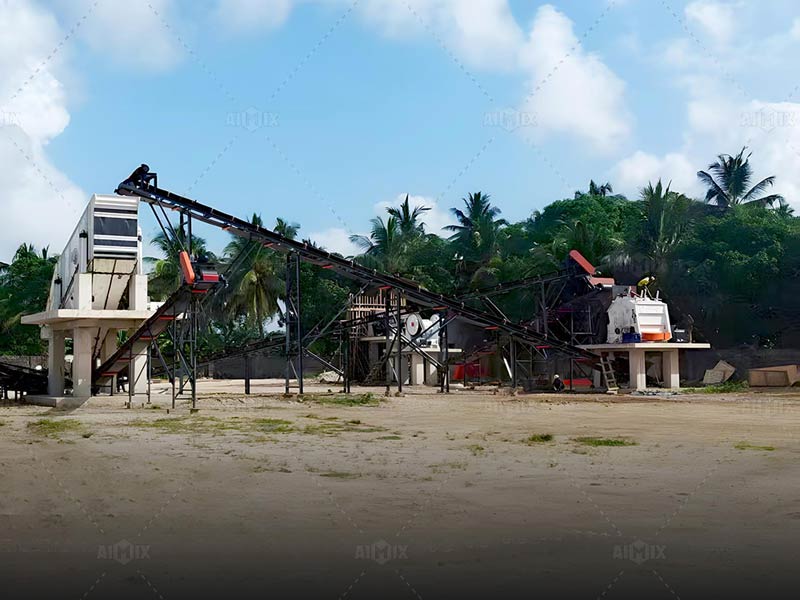
Before material even reaches the primary crusher, strategic pre-screening can be a game-changer. A grizzly screen or a robust scalper removes the natural fines (often clay or weathered material) and very small pieces from the run-of-quarry limestone. This accomplishes two vital goals: it prevents the packing of the limestone crusher chamber with material that doesn’t need crushing, and it immediately isolates a naturally occurring, well-shaped sand product. This pre-screening isn’t just about efficiency; it’s a proactive purification step, ensuring the primary crusher dedicates its energy to breaking only the rock that requires it, leading to a more consistent feed and reduced wear.
The Art of Particle Shaping: Secondary and Tertiary Refinement
If the primary stage is about controlled breakage, the secondary and tertiary stages are where aggregate is truly engineered. This is the realm of particle shaping, sizing precision, and the creation of value-added products.
Cone Crushers: The Masters of Cubical Yield
The secondary stage is dominated by the cone crusher, a machine that operates on the principle of interparticle compression. Material is crushed between a gyrating mantle and a stationary concave liner. The magic of the modern cone crusher lies in its ability to operate in a consistently choked, full-chamber condition. This creates a “rock-on-rock” crushing action within the chamber itself, where particles crush each other. This autogenous grinding is the secret to producing the highly prized, cubical particle shape that locks together perfectly in concrete and asphalt mixes, providing superior stability and load-bearing capacity. The precise adjustment of the CSS here determines the final grading of the coarse aggregate.
The Vertical Shaft Impactor (VSI): Architect of Manufactured Sand
For producing the finest aggregates and specification-grade manufactured sand (M-Sand), the Vertical Shaft Impactor (VSI) is the undisputed champion. This sand manufacturing machine operates on a high-velocity “rock-on-rock” or “rock-on-anvil” principle. It hurls limestone particles at tremendous speed, causing them to fracture along their natural cleavage planes. The VSI’s genius is its dual function: it is a superb reduction machine, but more importantly, it is a particle shaping maestro. It systematically knocks off weak edges and corners, creating highly cubical, rounded, and dense sand particles. This engineered sand is free of deleterious clay and silt, possesses consistent gradation, and often outperforms natural sand in concrete workability and strength.
The Critical Role of Screening: The Symphony’s Conductor
Crushers are the powerful instruments, but the screening deck is the conductor of the entire quality orchestra. Without precise, multi-deck screening, even the best crushing is wasted.
Closed-Circuit Configuration: The Feedback Loop of Perfection
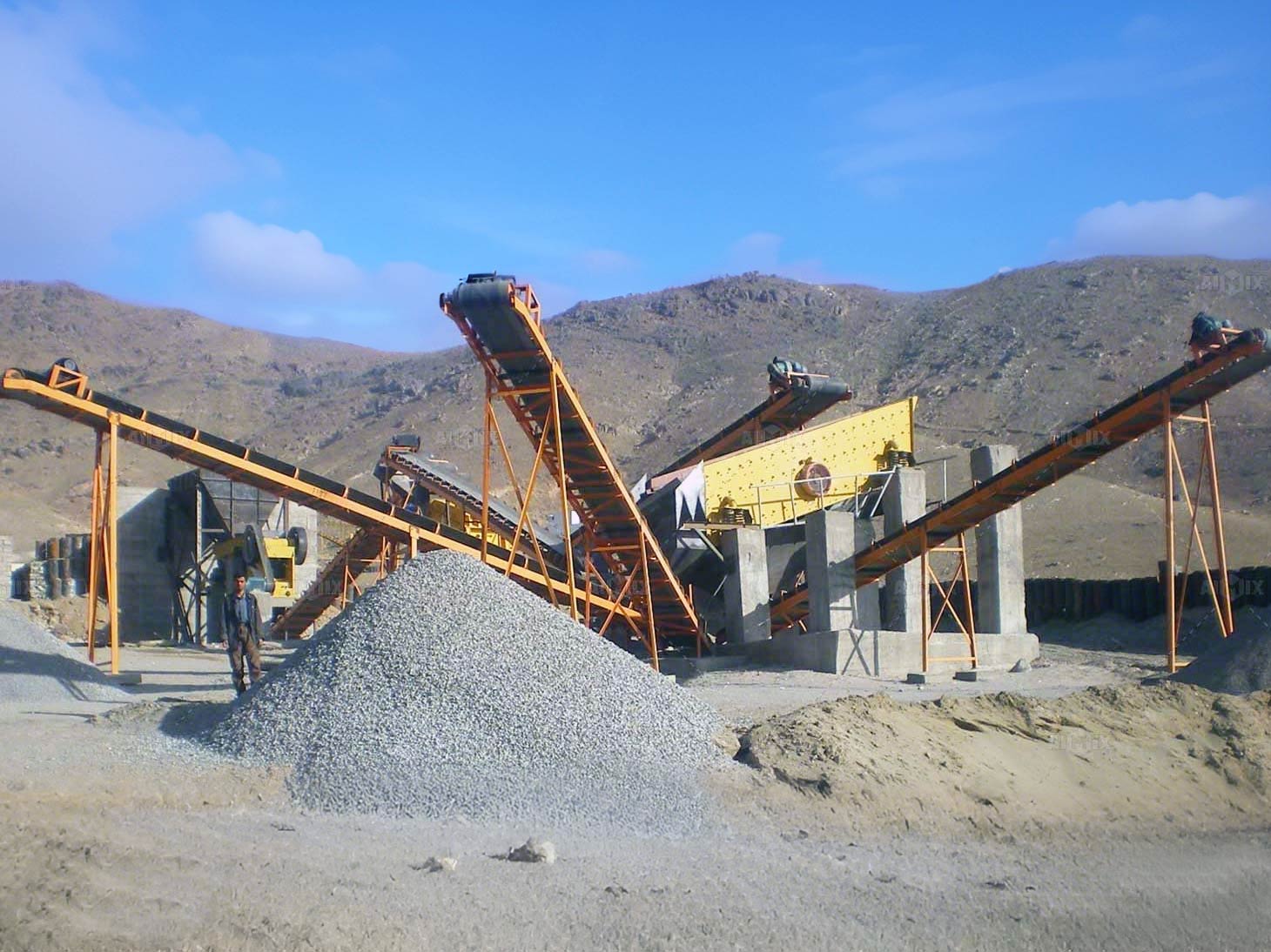
High-quality aggregate plants operate on a closed-circuit principle. After each crushing stage (secondary, tertiary), the entire output is fed onto a vibrating screen. Screens with precisely sized meshes act as rigorous quality gates. Material that meets specification is directed to its designated product stockpile. Crucially, any oversize material is not a waste product; it is immediately recirculated via a return conveyor—a “closed circuit”—back into the machine for crushing stone for further reduction. This automated feedback loop ensures that every single piece of limestone is processed until it meets the exact size and shape criteria. It eliminates guesswork and guarantees batch-to-batch consistency.
Washing and Classifying: The Final Purification
For the highest-specification applications, particularly for concrete sand, a final washing stage is the definitive touch. Log washers or sand classifying tanks remove any remaining dust, ultra-fines, or light organic materials. This purification step is non-negotiable for producing aggregate that will be used in high-strength concrete or architectural precast elements, where cleanliness directly correlates to the bond with cement paste. This final wash elevates the material from merely “crushed” to truly “engineered.”
The Tangible Outcome: Performance You Can Build On
The meticulous process we’ve described doesn’t exist in a vacuum. It manifests in tangible, measurable superiority on the construction site.
Engineering Properties Over Aesthetic
The cubical, dense aggregate produced by this optimized circuit delivers exceptional engineering properties. It has higher bulk density, leading to less void space in concrete mixes and requiring less cement paste for coating. Its superior particle shape provides greater interlock and shear strength in asphalt pavements, resisting rutting. The consistent gradation ensures predictable workability and pumpability, eliminating surprises for the ready-mix or asphalt plant operator. This is performance engineered into every grain.
The Economic Argument for Quality
Investing in a plant capable of this level of processing is not a cost; it’s a strategic market differentiation. Producers of high-quality, specification limestone aggregate command premium pricing and secure long-term contracts with demanding clients—government infrastructure agencies, premier ready-mix suppliers, and high-profile commercial developers. They avoid the commoditized, race-to-the-bottom pricing of low-grade material. More importantly, they build structures that last, reducing long-term societal maintenance costs. In the final analysis, superior crushing technology doesn’t just make better rock; it builds a more durable, reliable, and profitable future. Anything less is a compromise we simply cannot afford to make.