
The apparent savings of a mobile asphalt drum mix plant from budget asphalt plant suppliers evaporate when narrow municipal-roads demand precision impossible with fixed-speed cold-feed systems. In Thailand’s tropical aggregate environment, the absence of high-precision variable frequency drives (VFD) generates tender mixes prone to shoving under urban traffic loads. The resulting 24-hour stop-work orders and $10,000-per-day penalties for arterial blockage transform capital economy into operational catastrophe.
The Mechanics of Tender Mix Formation
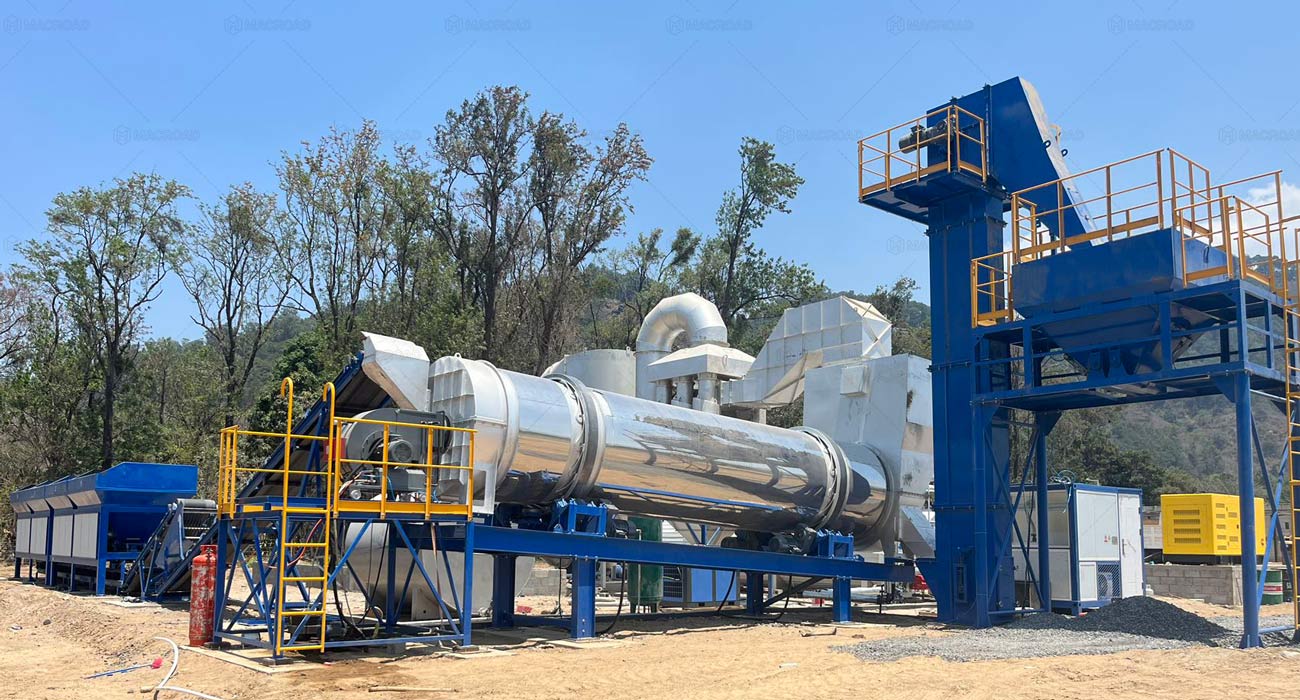
In light of this, tender mix results from binder-aggregate ratio instability during continuous production. Specifically, fixed-speed bin motors deliver constant mass flow regardless of aggregate moisture variation or size segregation. When tropical humidity spikes or local stone gradation drifts, the unresponsive feed system maintains volumetric output that over-enriches the mix with bitumen relative to effective aggregate surface area.
Conversely, VFD-equipped cold feeds modulate belt speed within 0.1 Hz resolution, compensating real-time for bulk density variation and maintaining consistent binder film thickness. From a logistics perspective, this precision prevents the excess binder that reduces internal friction and allows plastic deformation under loaded tires. Municipal-roads in Thailand’s urban cores cannot tolerate rutting or shoving that channels monsoon runoff or destabilizes motorcycle traffic.
Consequently, the asphalt drum mix plant selection must prioritize control responsiveness over nominal capacity. Asphalt plant suppliers offering fixed-speed architectures assume consistent feedstock quality that Thailand’s fragmented aggregate supply cannot provide. The tender mix risk compounds when narrow road geometry prevents lane diversion, making any pavement failure an immediate traffic management emergency.
Thailand-Specific Aggregate Challenges
The domestic aggregate landscape for an asphalt plant in Thailand presents unique variability. Specifically, lateritic gravels from provincial quarries exhibit moisture absorption rates 2–3 times higher than limestone, with gradation profiles that shift with rainfall and extraction sequencing. Crushed river stone introduces flat, elongated particles that alter packing density unpredictably. Fixed-speed cold feeds cannot adapt to these heterogeneities, producing mix that tests within laboratory tolerance but fails under field compaction and trafficking.
In light of this, the absence of VFD technology forces operational workarounds that introduce their own liabilities. Manual bin gate adjustment requires continuous operator vigilance and 15–20 minute response latency—sufficient to produce 10–15 tonnes of off-specification material before correction. Blending stockpiles to average out variation consumes yard space and extends production cycles, conflicting with urban paving windows that typically permit only 10:00 PM to 5:00 AM access.
From a logistics perspective, the $10,000-per-day penalty structure reflects Thailand’s acute urban congestion sensitivity. Municipal authorities issue immediate stop-work orders for any pavement defect that compromises arterial flow, regardless of root cause attribution. The asphalt plant in Thailand operator bears full financial exposure for tender mix failures even when aggregate quality disclaimers exist contractually.
Mitigation Strategies for VFD-Deficient Systems
When project constraints force deployment of non-VFD mobile asphalt drum mix plant assets, project managers must implement compensatory protocols. Specifically, intensive aggregate preconditioning—forced drying, covered stockpiling, and rigorous moisture monitoring—reduces feed variability to ranges fixed-speed systems can tolerate. This infrastructure investment typically consumes 8–12% of project direct cost but preserves paving continuity against stop-work vulnerability.
Conversely, real-time mix verification using portable ignition ovens or microwave moisture meters at the paver enables rejection before placement, limiting liability to material waste rather than strip-and-replace. However, narrow municipal-roads geometry often prevents truck turnaround for rejected loads, forcing acceptance of marginal material or complete paving halt.
Consequently, the procurement evaluation must weight VFD availability as a binary risk determinant. Asphalt plant suppliers offering VFD-equipped cold feeds provide operational insurance that fixed-speed alternatives cannot replicate through procedural diligence alone. The premium differential—typically 15–25% at procurement—represents a fraction of single incident penalty exposure in Bangkok or Chiang Mai urban corridors.
Conclusion
The lower entry cost of basic mobile asphalt drum mix plant configurations becomes prohibitive liability when surfacing Thailand’s narrow municipal-roads with variable local aggregates. High-precision VFD cold-feed systems from qualified asphalt plant suppliers prevent tender mix formation that triggers urban traffic penalties. Project managers must prioritize control responsiveness over capacity metrics, recognizing that Thailand’s aggregate heterogeneity and strict municipal enforcement create zero-tolerance for pavement shoving. The plant that adapts to feed variation preserves margin and schedule; the plant that assumes consistency generates stop-work orders and arterial blockage penalties.