
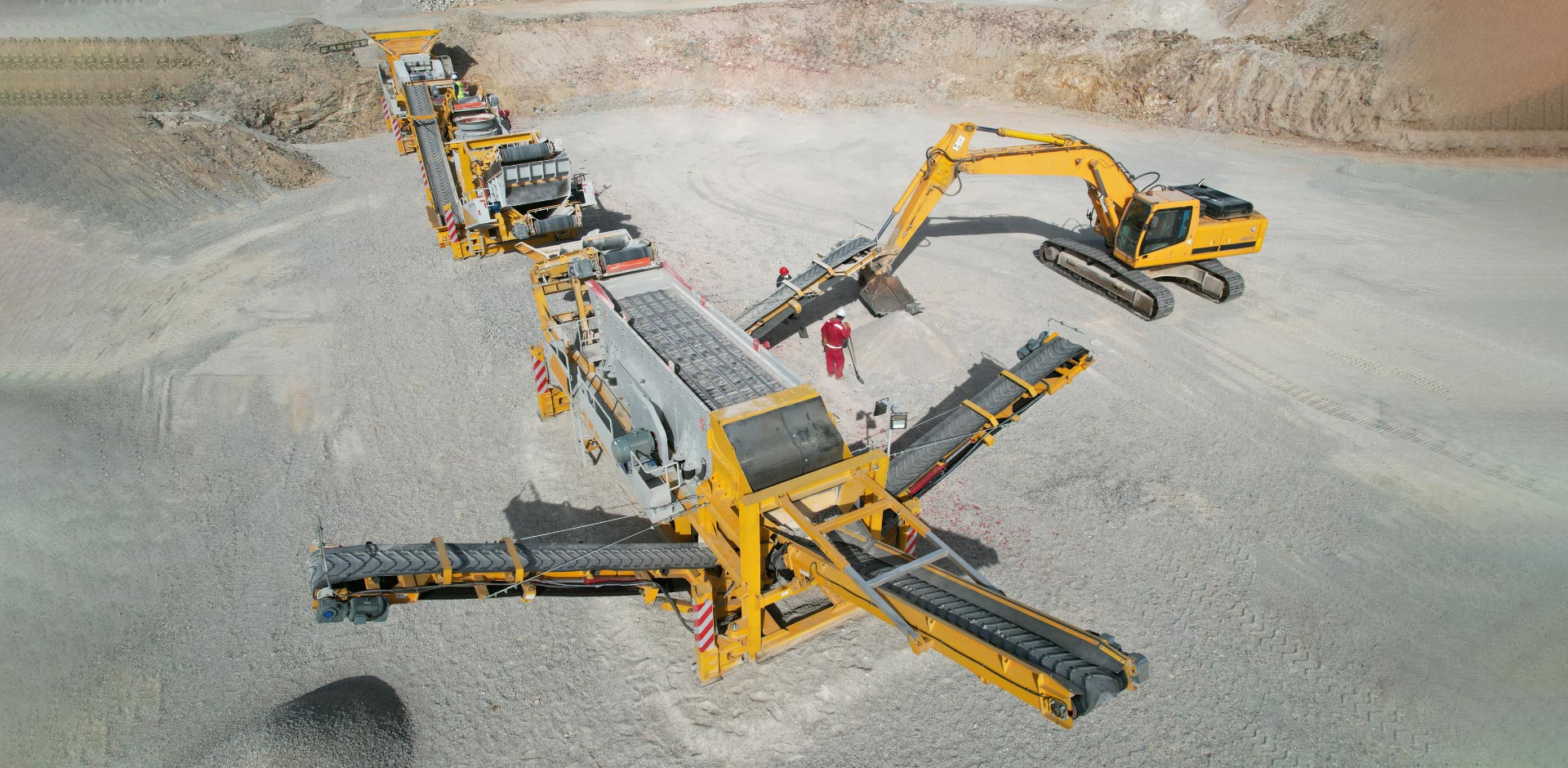
Highway construction places very specific demands on aggregate production. Granite is widely valued for its hardness, durability, and resistance to abrasion, making it suitable for many demanding road applications. Yet producing granite aggregate for a highway project is not simply a matter of crushing rock until the required quantity is reached. The project’s pavement structure, traffic loading, engineering specifications, aggregate gradation, production volume, and construction schedule all influence how the crushing operation should be configured.
As highway projects become larger and more technically demanding, granite crushing operations must move beyond a purely equipment-centered approach. The granite crusher machine, screening system, material handling arrangement, and production strategy need to work as an integrated process. A quarry supplying road construction aggregate may therefore require a different production configuration from one producing stone for general building applications. The objective is not merely higher output, but consistent aggregate quality, controlled particle shape, appropriate gradation, and dependable supply throughout the project.
How Highway Specifications Reshape Granite Aggregate Production
Aggregate Quality Becomes More Important Than Simple Production Volume
Highway construction consumes substantial quantities of aggregate, but tonnage alone does not determine whether a production line is successful. Road aggregates must meet requirements related to particle size distribution, strength, durability, cleanliness, and resistance to degradation.
Granite naturally offers strong mechanical properties, but the crushing process itself influences the characteristics of the final aggregate. Excessive fines, unsuitable particle shapes, or inconsistent gradation can reduce the usefulness of the material for particular pavement layers.
Therefore, aggregate production for road construction begins with understanding the final application. Base courses, sub-base materials, asphalt mixtures, and concrete pavement can each require different aggregate specifications.
Gradation Determines How the Crushing Line Should Be Organized
A highway project may require several aggregate fractions rather than one uniform product. For example, coarse aggregate may be required for structural applications, while smaller fractions are needed for asphalt mixtures or pavement layers.
This creates a more intricate production objective. The crushing plant must reduce large granite blocks through multiple stages while screening the material into controlled size ranges.
Primary, Secondary, and Fine Crushing Have Different Roles
A primary granite crusher is responsible for reducing blasted rock into manageable sizes. Jaw crushers are commonly used for this stage because they can accept large feed material and provide robust coarse crushing performance.
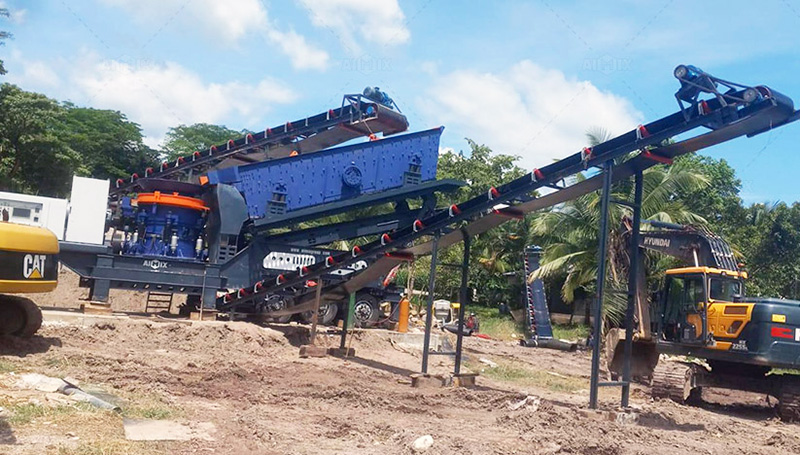
Secondary crushing then reduces the material further and begins shaping the particle-size distribution. Depending on the required product, cone crushers or impact crushers may be incorporated into the process.
For finer aggregate requirements, additional crushing and screening may be necessary. The correct configuration depends on the desired output rather than simply the maximum theoretical capacity of an individual machine.
Why Highway Projects Require a More Controlled Granite Crushing Process
Road Aggregate Production Must Remain Consistent Over Long Runs
Highway projects can continue for months or even years. Aggregate supply therefore needs to remain consistent throughout the construction period.
A temporary fluctuation in crusher performance can affect the entire downstream process. If the crushing chamber produces excessive oversize or fines, the screening system may become overloaded, stockpile proportions can shift, and the final aggregate blend may no longer match the project requirements.
For this reason, production stability is often more valuable than occasional peak output. A granite crusher operating steadily at an appropriate capacity can be more useful than a larger machine that frequently experiences interruptions.
Granite Abrasiveness Influences Equipment Configuration
Granite is a hard and abrasive material. Continuous granite crushing therefore places significant stress on wear components, including jaw plates, liners, blow bars, and other contact surfaces.
High wear rates can alter the crushing chamber profile over time. As wear progresses, product gradation and crushing efficiency may gradually change.
Wear Management Becomes Part of Aggregate Quality Control
Highway aggregate production should therefore incorporate regular inspection of wear parts and timely replacement schedules. Monitoring equipment condition helps maintain a more predictable crushing process.
This is particularly important when the aggregate must meet strict gradation specifications. Equipment maintenance is not merely a mechanical concern; it can directly influence the characteristics of the finished road material.
Particle Shape Can Influence the Choice of Crushing Equipment
Highway applications may place greater emphasis on particle shape than some general-purpose aggregate markets. Cubical particles can provide favorable interlocking characteristics in certain applications, while excessive flaky or elongated particles may be undesirable.
The crushing mechanism affects this outcome. Compression crushing and impact crushing produce different material characteristics, and the optimal combination depends on the source rock and required aggregate specifications.
Consequently, granite crushing for highways should be designed around the desired end product rather than relying on a one-size-fits-all crusher arrangement.
How Mobile Crushing Changes Granite Aggregate Supply for Highway Projects
Mobile Crushers Bring Production Closer to the Construction Corridor
Highway projects frequently extend over long distances. A conventional stationary quarry may be capable of producing large quantities of aggregate, but transporting that material to distant sections of the project can create considerable logistical pressure.
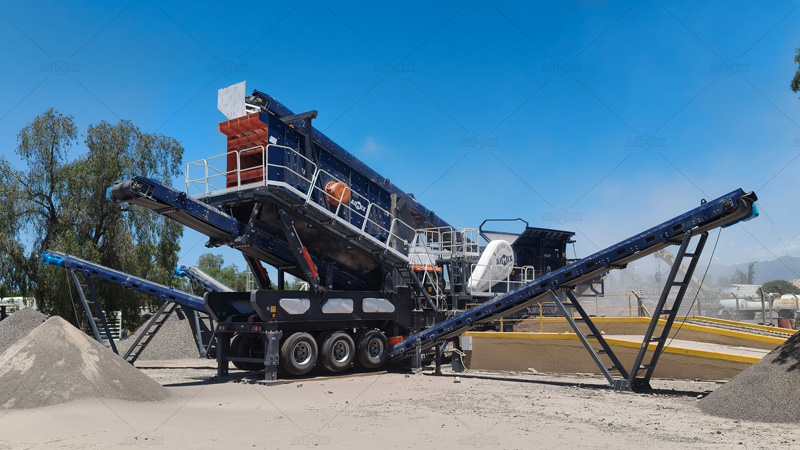
A mobile crusher offers a different approach. Crusher mobile can be positioned closer to the material source or construction area, depending on project conditions.
This can reduce transportation distances and provide greater flexibility when the work front changes.
Mobile Crushing Supports Temporary and Decentralized Projects
Not every highway project justifies a permanent crushing facility. Temporary road upgrades, remote highway sections, and geographically dispersed infrastructure works may benefit from equipment that can be relocated after one stage of construction is completed.
A mobile crusher can function as a movable production unit, reducing the need to transport raw granite over long distances before processing.
Mobility Must Still Be Balanced With Production Requirements
Mobile equipment is not automatically the best option for every highway project. Large, long-duration quarry operations with stable material sources may benefit from stationary high-capacity plants with extensive stockpiling infrastructure.
The decision should consider project duration, haul distance, required capacity, available site space, relocation frequency, and aggregate demand.
Screening Becomes Just as Important as Granite Crushing
Producing crushed granite is only half of the process. The material must then be screened into usable fractions.
An effective screening system separates the output according to project requirements and returns oversize material to the crusher when necessary. This closed-loop arrangement helps improve utilization of the feed material and provides tighter control over product gradation.
For highway aggregate production, screening performance can therefore have as much practical importance as crusher capacity.
Production Planning Should Follow the Road Construction Schedule
Highway construction does not consume aggregate at a constant rate. Different phases can create different demand patterns. Earthworks, drainage, pavement foundation, asphalt production, and finishing operations may require different materials and quantities.
Aggregate production should therefore be synchronized with the construction schedule.
Producing excessive quantities too early can create stockpiling and handling problems. Producing too little can interrupt downstream construction. A well-planned granite crushing operation maintains sufficient inventory without creating unnecessary material movements.
From Rock Quarry to Roadway
The complete production chain can be viewed as a material-flow system:
Granite extraction → Primary crushing → Secondary crushing → Screening → Re-crushing where necessary → Stockpiling → Highway application
Every stage influences the next. A problem at the crusher can become a screening problem; a screening problem can become a stockpile imbalance; and an inconsistent stockpile can eventually affect pavement production.
The central requirement is therefore coordination.
Highway construction changes granite aggregate production requirements because the goal is no longer simply to produce crushed stone. The production system must deliver the right material, in the right gradation, at the right volume, and at the right time.
A properly selected granite crusher provides the foundation, while screening, material handling, wear management, and production scheduling complete the system. For long-distance highway projects, a mobile crusher can add logistical flexibility, whereas stationary granite crushing plants may remain preferable for stable, high-volume quarry operations.
Ultimately, successful aggregate production for road construction is an exercise in precision rather than brute-force output. Granite crushing must be engineered around the road’s specifications, construction rhythm, and lifecycle requirements. When those factors shape the crushing strategy from the beginning, the resulting aggregate supply becomes more predictable, more efficient, and better aligned with the demanding standards of modern highway construction.