
Latin America’s fast-growing construction and civil infrastructure sectors demand highly reliable, efficient, and cost-effective material production. Choosing the ideal concrete plant is one of the most critical decisions a general contractor, engineering firm, or commercial developer can make. This strategic asset directly influences daily project timelines, material consistency, and long-term profit margins. Investing in a reliable concrete plant allows builders to take control of their supply chain, eliminate reliance on third-party suppliers, and scale their operations effectively across the region.
As rapid urban development surges across South and Central America, construction companies face diverse operational environments. These challenges range from space-restricted metropolitan job sites to remote, high-altitude infrastructure projects. Selecting the proper concrete plant(planta de hormigón) scale—from a flexible compact setup to a heavy-duty industrial facility—enables builders to optimize resource allocation, eliminate costly material transit delays, maintain uncompromised structural quality, and achieve full operational autonomy.
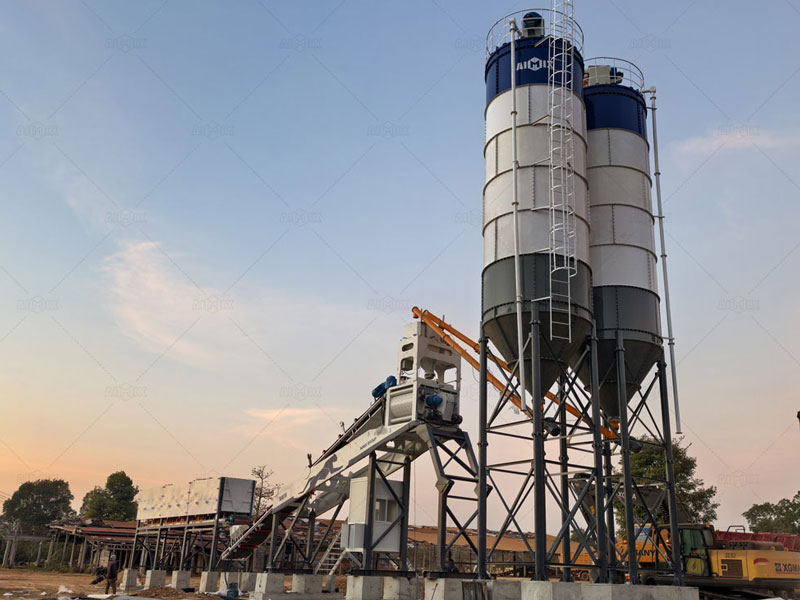
Assessing Project Scale: Small, Medium, or Large Solutions
Every construction venture possesses unique volume requirements, timeline constraints, and spatial footprints. Categorizing your operational scope carefully helps determine whether a compact, medium, or high-capacity system best serves your long-term business growth and operational goals.
When to Invest in a Small Concrete Plant
For municipal road repairs, residential housing developments, urban drainage systems, and localized building construction, a small concrete plant(planta de concreto pequeña) offers unmatched agility, ease of operation, and financial efficiency. These compact units are engineered specifically for operations with moderate hourly output demands, typically producing 25 to 50 cubic meters per hour.
Because it features a streamlined structural footprint, a small concrete plant can be delivered, assembled, and commissioned with minimal setup time and reduced transportation expenses. Contractors managing multiple short-term projects across different sites often prefer a small concrete plant because it minimizes machine idle time, cuts logistical overhead, and significantly reduces the initial capital outlay required compared to massive industrial setups.
Medium and Large Solutions for High-Volume Demands
In contrast, major civil infrastructure undertakings—such as national highway networks, seaport terminals, hydroelectric dams, and multi-story commercial towers—demand industrial-grade machinery capable of continuous, high-volume output. Medium and large facilities (producing 60 to over 240 cubic meters per hour) provide heavy-duty aggregate bins, powerful twin-shaft mixers, and automated computer control interfaces. Operating a high-capacity concrete plant ensures uniform batching precision and round-the-clock reliability for large-scale operations.
| Plant Scale | Hourly Output (m³/h) | Primary Applications | Key Advantage |
|---|---|---|---|
| Small Scale | 25 – 50 m³/h | Urban roads, small housing, foundations | Low capital outlay & fast mobility |
| Medium Scale | 60 – 90 m³/h | Commercial buildings, bridges, pipelines | Balanced capacity & versatile output |
| Large Scale | 120 – 240+ m³/h | Dams, major highways, mega infrastructure | Maximum yield & continuous production |
Exploring Advanced Plant Series and Configurations
Modern industrial engineering offers specialized machinery configurations tailored to the unique operational terrains found across Latin America. Evaluating these specialized equipment options ensures contractors select machinery engineered precisely for their specific logistical demands and project timelines.
Stationary and Mobile Systems
The AJ series stationary concrete plant represents the definitive choice for long-term industrial projects and centralized ready-mix supply yards where a permanent operational base is maintained for several years. Frequently specified for major infrastructure projects and high-capacity concrete mixing plants in Chile(plantas hormigoneras en Chile), it delivers exceptional structural stability, heavy-duty wear resistance, massive aggregate storage capacity, and superior mixing efficiency.
Conversely, the AJY series mobile concrete plant is built specifically for projects requiring frequent site relocations and rapid field deployment. Engineered upon a heavy-duty chassis equipped with wheels and towing pins, this mobile system can be folded, moved, and re-erected quickly between scattered job sites. This makes it an ideal concrete plant option for linear highway paving, railway projects, and decentralized municipal works.
Quick-Installation and Pumping Integration Systems
For fast-track construction contracts operating under tight deadlines or in challenging geography, advanced modular designs streamline setup and material delivery:
- AJQ Series Quick-Installation Concrete Plant: Features a fully pre-wired, modular structure that minimizes foundation preparation work and cuts on-site assembly duration by up to 50%, enabling contractors to begin production quickly.
- AJP Series Concrete Mixing and Pumping Plant: Seamlessly combines batching machinery and direct concrete pumping equipment into a single integrated unit, eliminating intermediate transit steps and lowering machinery acquisition costs for high-rise and bridge projects.
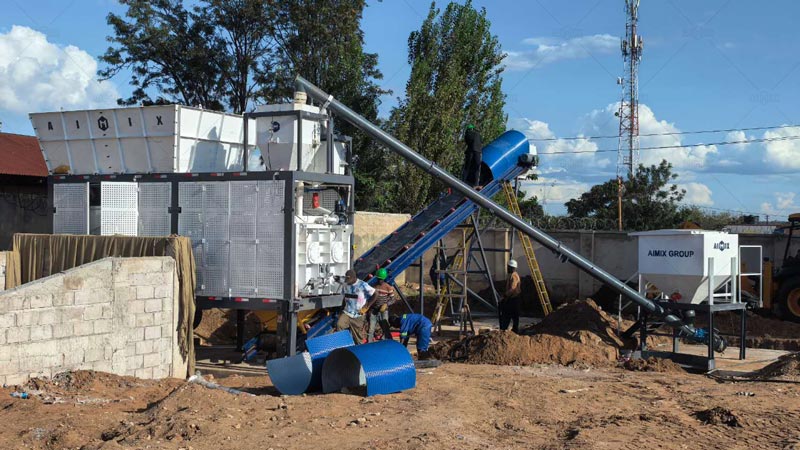
Regional Market Considerations and Investment Factors
Procuring batching machinery across Latin America requires a clear understanding of local building regulations, environmental compliance standards, and financial budgeting strategies. Requirements vary substantially depending on the country, altitude, and local structural codes.
Meeting Structural Standards and Market Needs in Chile
Across South America, engineering standards are continually evolving to enhance structural resistance against natural hazards. Demand for specialized concrete mixing plants in Chile has risen significantly due to the nation’s stringent seismic engineering codes and strict environmental regulations. When evaluating concrete mixing plants in Chile, buyers must prioritize structural durability, reinforced frame designs, and advanced dust-suppression systems. Installing high-spec concrete mixing plants in Chile helps contractors fulfill legal requirements while ensuring reliable performance under harsh environmental conditions.
Analyzing Concrete Plant Price and Return on Investment
When budgeting for new equipment, assessing the concrete plant price requires looking beyond the initial factory invoice. A realistic evaluation of the concrete plant price(planta de hormigón precio) includes factors such as shipping logistics, installation expenses, energy consumption, and maintenance costs. While a lower concrete plant price may seem attractive initially, high-quality components and automated control systems provide far better long-term reliability. Calculating total ROI rather than focusing solely on the baseline concrete plant price allows contractors to make an economically sound decision that maximizes profitability over time.
Selecting the ideal machinery involves aligning project requirements, equipment capabilities, and financial targets. By carefully weighing plant capacities, exploring specialized series configurations, and evaluating market factors across Latin America, construction firms can secure a powerful operational advantage, guarantee material consistency, and support long-term regional growth.