
A 100-ton gantry crane is designed for heavy-duty lifting operations in industries such as precast concrete production, steel fabrication, shipbuilding, railway construction, logistics yards, and large infrastructure projects. However, many users ask an important question before purchasing or operating this type of crane:
Can a 100-ton gantry crane safely lift 100 tons every day?
The short answer is yes – but only when the crane is properly designed, correctly selected, well maintained, and operated under suitable working conditions. The rated lifting capacity of a gantry crane is not simply a theoretical number. It represents a carefully engineered limit that depends on structural strength, duty classification, operating frequency, environmental conditions, and safety factors.
In this article, we will explore what “100-ton capacity” actually means, whether continuous full-capacity lifting is realistic, and what factors determine the long-term safety and reliability of a 100 ton gantry crane.
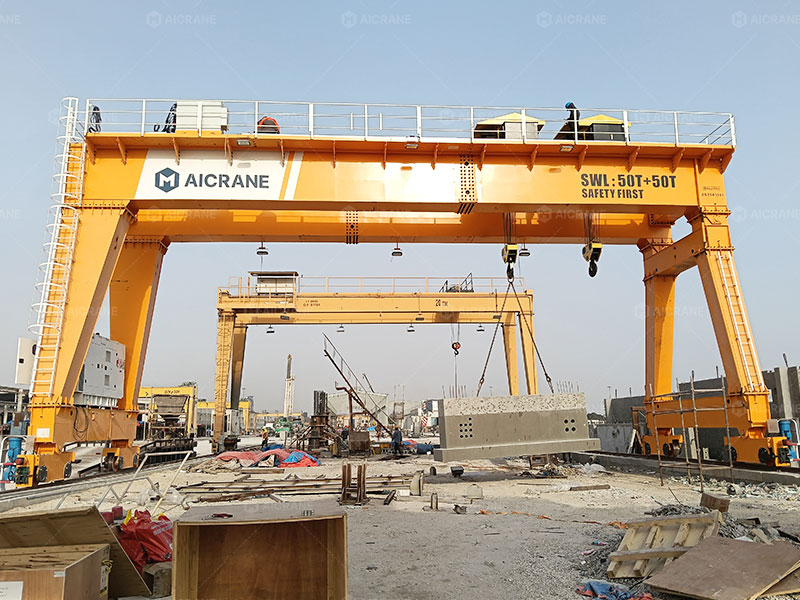
What Does “100-Ton Gantry Crane” Really Mean?
A 100-ton gantry crane is engineered to lift loads up to 100 tons under specified operating conditions. This capacity is determined during the crane design process and includes calculations related to:
- Structural strength
- Hoisting system performance
- Load distribution
- Dynamic forces
- Fatigue resistance
- Safety margins
- Duty cycle requirements
The crane’s rated capacity is usually based on standardized engineering regulations and safety codes. However, this does not automatically mean the crane should lift exactly 100 tons continuously, all day, every day, without considering operational realities.
Rated Capacity vs. Continuous Working Load
One of the biggest misconceptions in industrial lifting is assuming that rated capacity equals ideal continuous operating load.
In practice, lifting 100 tons occasionally is very different from lifting 100 tons repeatedly throughout the day.
The actual operating capability depends on:
- Frequency of lifting cycles
- Daily operating hours
- Load spectrum
- Acceleration and deceleration
- Environmental conditions
- Operator practices
- Maintenance quality
For example, a gantry crane lifting 100 tons once per shift experiences far less structural fatigue than a crane lifting 100 tons every 10 minutes for 12 hours a day.
This distinction is extremely important.
Understanding Crane Duty Classification
The duty classification of a gantry crane plays a major role in determining whether it can safely perform full-capacity lifting daily.
Duty classification reflects:
- How often the crane operates
- Average load intensity
- Number of lifting cycles
- Working environment
- Expected service life
Heavy-duty industrial gantry cranes are commonly designed for classifications such as A5, A6, A7, or even A8, depending on international standards.
Generally:
- A5 cranes are suitable for moderate-duty operations
- A6 cranes support heavier and more frequent lifting
- A7/A8 cranes are designed for intensive industrial applications with high utilization rates
If a 100-ton gantry crane is expected to lift near-capacity loads every day, selecting the correct duty classification becomes critical.
A crane designed only for moderate-duty service may experience accelerated wear, fatigue cracking, or premature component failure under continuous maximum loading conditions.
Structural Fatigue: The Hidden Factor
Even when a crane can technically lift 100 tons, repeated heavy lifting creates fatigue stress within the structure over time.
Unlike sudden overload failure, fatigue damage develops gradually through repeated stress cycles. Areas most vulnerable include:
- Main girders
- Welded joints
- Connection plates
- Trolley rails
- End beams
- Hoist mounting areas
The higher the load and the more frequent the lifting cycles, the greater the fatigue accumulation.
This is why engineering design for heavy duty gantry cranes focuses not only on maximum load capacity but also on fatigue life.
A properly designed 100-ton gantry crane intended for continuous heavy-duty operation will use:
- Higher-grade steel
- Reinforced structural sections
- Optimized weld design
- Fatigue-resistant engineering
- Advanced finite element analysis
- Larger safety margins
These design measures help ensure long-term reliability under demanding working conditions.
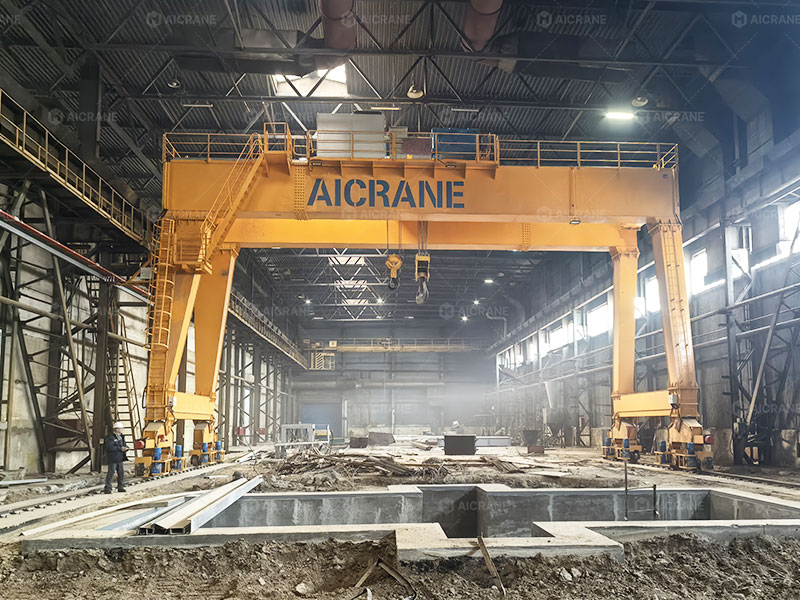
Dynamic Loads Matter More Than Static Loads
Another critical factor is dynamic loading.
A stationary 100-ton load is not the same as a moving 100-ton load. During crane operation, dynamic forces are generated by:
- Hoisting acceleration
- Sudden stopping
- Trolley travel
- Crane travel
- Load swinging
- Impact during lifting
- Wind forces
In many cases, dynamic loads can exceed the static weight of the load itself.
For example, improper operation such as abrupt acceleration or emergency braking may significantly increase stress on the crane structure and hoisting system.
This is why modern 100-ton gantry cranes often include:
- Variable frequency drives (VFDs)
- Anti-sway systems
- Smooth acceleration control
- Load monitoring systems
- Intelligent safety protections
These technologies help reduce dynamic stress and improve operational safety.
Can a 100-Ton Crane Lift 100 Tons Every Day Safely?
The answer depends on how the crane is engineered and used.
A high-quality 100-ton gantry crane specifically designed for heavy-duty industrial operation can safely handle near-capacity lifting daily if:
- The crane duty classification matches the application
- Load handling procedures are correct
- The crane is regularly inspected
- Maintenance is properly performed
- Dynamic shock loading is minimized
- Environmental conditions are controlled
- Operators are well trained
However, using a standard-duty crane in extremely intensive operations can shorten equipment life and increase safety risks.
The Importance of Proper Crane Selection
Choosing the right 100-ton gantry crane involves far more than selecting a lifting capacity.
Key considerations include:
Working Duty
How many lifting cycles occur daily?
Load Spectrum
Will the crane lift 100 tons constantly, or only occasionally?
Span and Lifting Height
Longer spans create higher structural stress.
Outdoor or Indoor Operation
Outdoor cranes face wind, rain, temperature changes, and corrosion.
Operating Speed Requirements
High-speed handling increases dynamic loading.
Environmental Conditions
Dust, humidity, salt air, and extreme temperatures affect crane durability.
A customized engineering solution is often necessary for intensive heavy lifting applications.
Why Overloading Is Extremely Dangerous
Some operators mistakenly assume a 100-ton crane can safely lift slightly more than its rated capacity.
This is extremely risky.
Even occasional overloading may cause:
- Permanent structural deformation
- Wire rope damage
- Hoist failure
- Brake overload
- Rail misalignment
- Fatigue crack initiation
- Reduced equipment lifespan
Modern gantry cranes are usually equipped with overload protection systems to prevent unsafe lifting conditions.
Ignoring rated capacity limitations can create serious safety hazards and legal liabilities.
Maintenance Determines Long-Term Safety
Even the best-designed gantry crane requires proper maintenance to safely perform heavy lifting operations over many years.
Critical maintenance tasks include:
- Structural inspection
- Weld crack detection
- Wire rope inspection
- Lubrication of moving parts
- Brake system testing
- Motor and gearbox maintenance
- Electrical system inspection
- Rail alignment checks
- Bolt tightening verification
For cranes operating near full capacity daily, preventive maintenance becomes even more important.
Many industrial facilities now use predictive maintenance systems that monitor crane condition in real time to reduce unexpected failures.
Operator Skill Has a Major Impact
Crane operators significantly influence crane lifespan and safety performance.
Poor operating habits can dramatically increase stress on the crane, including:
- Sudden starts and stops
- Side pulling loads
- Improper rigging
- Excessive load swinging
- High-speed impact loading
Experienced operators use smooth and controlled movements to minimize dynamic forces and improve equipment longevity.
Operator training is therefore essential for heavy-duty gantry crane applications.
Modern Technology Improves Heavy Lifting Safety
Today’s advanced gantry cranes include intelligent technologies that improve safety during continuous heavy lifting operations.
These may include:
- Real-time load monitoring
- Anti-collision systems
- Wind speed monitoring
- Automated positioning
- Load sway control
- Remote diagnostics
- Smart maintenance systems
- PLC automation
These systems help reduce human error and optimize crane performance under demanding conditions.
Industry Applications That Require Daily Heavy Lifting
Many industries rely on 100-ton gantry cranes for frequent heavy lifting operations, including:
Precast Concrete Yards
Handling bridge girders, concrete beams, and large precast segments.
Steel Plants
Lifting steel coils, structural steel, and heavy fabrication components.
Shipyards
Moving ship blocks, engines, and marine structures.
Railway Projects
Handling precast bridge components and railway equipment.
Hydropower and Energy Projects
Transporting turbines, generators, and oversized machinery.
In these industries, cranes are specifically engineered for high-intensity workloads.
Conclusion
A 100-ton gantry crane can safely lift 100 tons every day—but only under the right conditions.
The key is understanding that crane safety and reliability depend on much more than rated capacity alone. Factors such as duty classification, fatigue resistance, dynamic loading, maintenance quality, environmental conditions, and operator skill all determine whether continuous heavy lifting can be performed safely over the long term.
For demanding industrial applications, selecting a properly engineered heavy-duty gantry crane is essential. A crane designed specifically for frequent near-capacity lifting will provide better structural durability, improved safety, longer service life, and lower operational risk.
Ultimately, safe daily lifting of 100 tons is not simply about whether the crane can lift the load once—it is about whether the entire crane system is designed to handle that workload consistently, efficiently, and safely for years of operation.