
For decades, fixed cranes have been a common lifting solution in shipyards and boat repair facilities. They are familiar, reliable, and suitable for certain lifting tasks such as moving engines, steel sections, or equipment around a workshop. However, when it comes to handling complete vessels — lifting boats from water, transporting them across the yard, and positioning them for maintenance — many shipyards are facing limitations with traditional fixed crane systems.
Limited working areas, increasing vessel sizes, higher labor costs, and the need for faster turnaround times are pushing more shipyards to consider mobile boat travel lifts as an alternative. Unlike fixed cranes that operate from a permanent position, a travel lift for sale can move around the yard while carrying a vessel, giving operators more flexibility during hauling, launching, and maintenance operations.
This shift is not simply about replacing one lifting machine with another. It reflects a change in how modern shipyards manage vessel flow, available space, and operational efficiency.
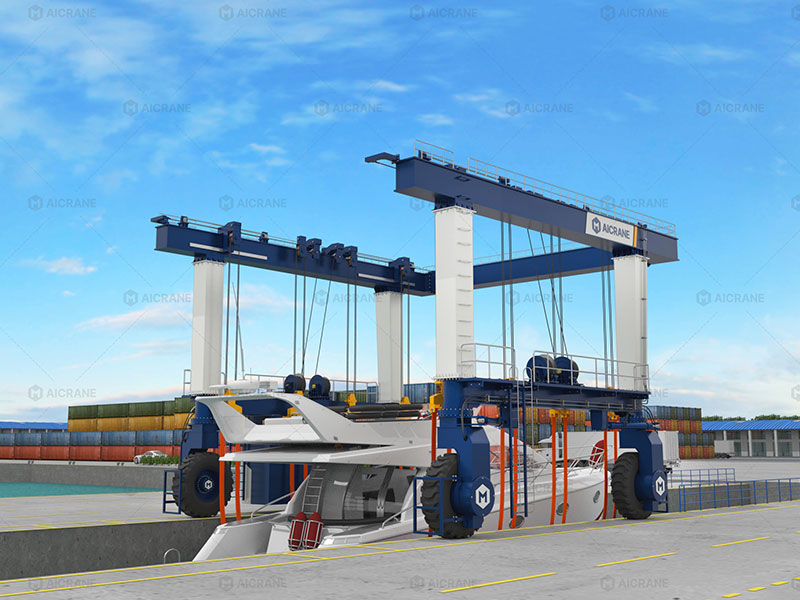
Fixed Crane Limitations in Complete Boat Handling Operations
A fixed crane works well when the lifting point and working area remain unchanged. For example, a workshop crane can repeatedly move components between two fixed locations. However, boat handling requires a different approach.
When a vessel arrives for repair, the shipyard needs to complete several steps:
- Lift the boat from the water safely
- Move it away from the launching area
- Transport it to a repair zone
- Position it accurately for maintenance work
- Return it to the water after completion
A fixed crane can usually perform only part of this process. After lifting the boat, additional equipment such as trailers, transporters, or additional lifting systems may be required to move the vessel. This increases handling steps and creates additional coordination requirements.
For shipyards handling multiple boats every week, these extra steps can significantly affect productivity.
Another challenge is infrastructure requirements. A large fixed crane normally requires reinforced foundations, dedicated rails, or a permanent installation area. For existing shipyards, adding a new fixed crane may involve major civil construction work, long installation periods, and disruption to ongoing operations.
A mobile boat travel lift avoids many of these limitations because it combines lifting and transportation functions in one machine.
Mobile Boat Travel Lifts Provide Flexible Vessel Movement
The biggest advantage of a travel lift is mobility.
A typical boat travel lift consists of a steel gantry structure supported by rubber tires, with lifting slings suspended between the legs. After lifting a vessel, the machine can drive across the yard and place the boat in different working areas.
This capability is especially valuable for shipyards where space utilization is critical.
For example, a repair yard may have:
- A limited waterfront area for launching
- Several maintenance bays located away from the dock
- Different ground conditions across the yard
- Multiple vessel sizes arriving throughout the year
Instead of waiting for a fixed crane position or arranging multiple pieces of handling equipment, operators can use the mobile boat hoist to move vessels directly from the water to the required location.
The result is a smoother boat handling process and better use of existing yard space.
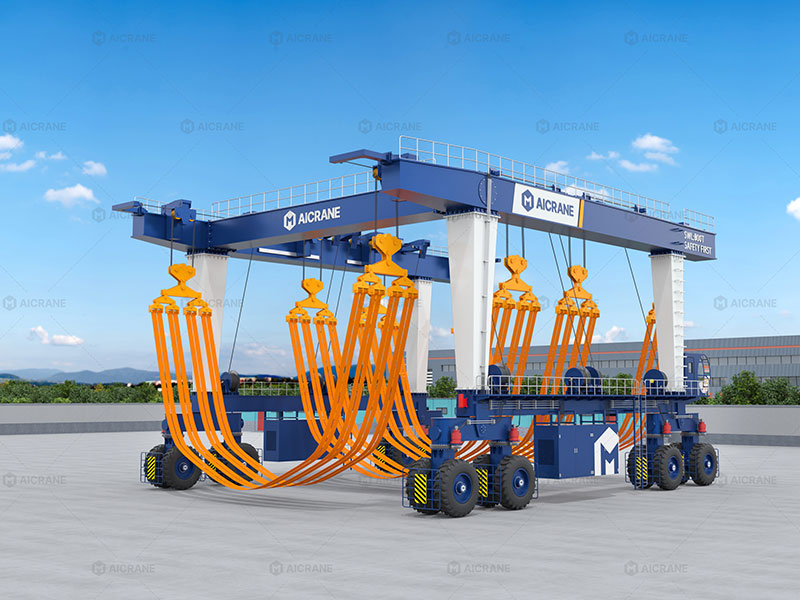
Improving Shipyard Productivity Without Expanding Infrastructure
Many shipyard owners face a common challenge: they want to increase repair capacity but do not have enough land or budget for expansion.
Building additional docks, installing rails, or constructing permanent lifting structures can require significant investment. A mobile boat travel lift provides another option.
Because it does not depend on fixed runway systems, a travel lift can support flexible yard layouts. Operators can reorganize storage areas, maintenance zones, and parking spaces based on current business needs.
For example, during a busy season, a shipyard may need to temporarily increase repair positions for fishing boats or workboats. A mobile travel lift allows the yard to move vessels into available open areas instead of being restricted by fixed crane coverage.
This flexibility is particularly useful for small and medium-sized shipyards that handle different vessel types but cannot justify multiple permanent lifting systems.
Better Adaptability for Different Vessel Sizes
Boat handling requirements vary significantly depending on vessel type.
A marina may mainly service yachts and small recreational boats, while a commercial shipyard may handle fishing vessels, patrol boats, offshore support vessels, and workboats.
A fixed crane designed for a specific lifting area may not always adapt easily to different vessel dimensions. In contrast, travel lifts are available in different capacities and configurations, allowing shipyards to select equipment according to their operating requirements.
Important factors include:
- Safe working load capacity
- Maximum vessel beam width
- Lifting height
- Wheel configuration
- Ground conditions
- Sling arrangement
For example, a 50 ton travel lift may be suitable for smaller yachts and fishing boats, while larger commercial shipyards may require 100-ton, 120-ton, or higher-capacity machines for heavier vessels.
The lifting system can also be customized according to hull shape and vessel structure. Adjustable slings and hydraulic lifting systems help distribute loads more evenly, reducing stress on the hull during lifting.
Reducing Boat Handling Risks During Maintenance
Boat lifting is one of the most safety-sensitive operations in a shipyard. A vessel represents a significant investment, and improper handling can cause structural damage, delays, and expensive repairs.
Travel lifts are designed specifically for vessel transportation. The lifting points, sling arrangement, and movement control system are developed around boat handling requirements.
Compared with using general-purpose lifting equipment, a dedicated travel lift provides advantages such as:
- Controlled vertical lifting
- Stable vessel support
- Synchronized lifting movement
- Better operator visibility during transport
- Lower dependence on temporary lifting arrangements
Modern travel lifts often include hydraulic systems that allow smoother movement and better adjustment when positioning vessels on blocks or stands.
For shipyard operators, this means fewer risks during one of the most critical stages of vessel maintenance.
Lower Long-Term Operating Costs
Although a travel lift requires an initial investment, many shipyards evaluate the equipment based on long-term operational value rather than purchase price alone.
A fixed crane installation may involve:
- Foundation construction
- Rail systems
- Structural reinforcement
- Regular maintenance of fixed components
- Limited operating coverage
A mobile travel lift requires less permanent infrastructure. It can serve multiple areas of the yard without additional construction.
For businesses that handle different vessel types or frequently change yard layouts, this flexibility can translate into better equipment utilization.
In addition, faster vessel movement can reduce waiting time between lifting, repair, and launching operations. Shorter turnaround times allow shipyards to complete more projects within the same facility.
Why Travel Lifts Are Becoming More Common in Modern Shipyards
The growth of travel lifts does not mean fixed shipyard cranes are becoming obsolete. Fixed cranes still have important applications in shipbuilding workshops, fabrication areas, and heavy component handling.
However, for complete vessel transfer operations, many shipyards are looking for equipment that provides more mobility and operational flexibility.
A mobile boat travel lift addresses several challenges that modern shipyards face:
- Limited yard space
- Increasing vessel diversity
- Demand for faster repairs
- Higher safety requirements
- Reduced infrastructure expansion opportunities
For shipyards planning upgrades or new marine facilities, choosing the right boat handling system is a strategic decision. The ideal solution depends on vessel size, operating environment, lifting frequency, and future business plans.
As marine maintenance operations become more competitive, equipment that helps shipyards move boats safely, efficiently, and flexibly will continue to play an important role. For many operators, replacing or supplementing fixed cranes with mobile boat travel lifts is becoming a practical way to improve daily operations without rebuilding the entire facility.